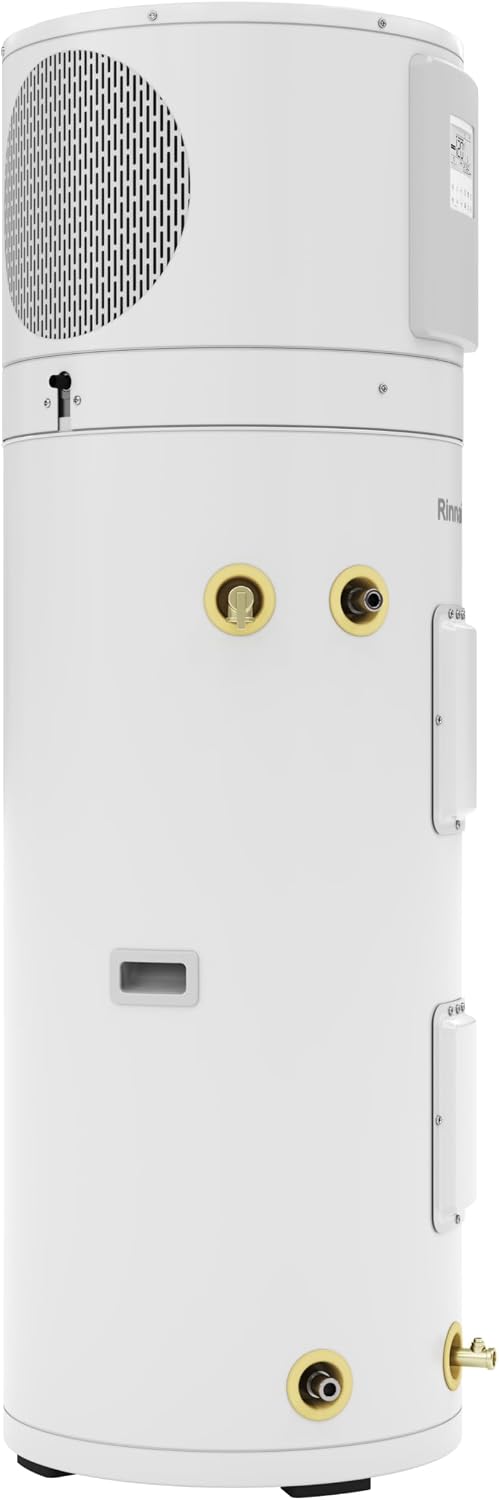
A heat pump water heater (HPWH) is exactly what it sounds like: a water heater that uses a small heat pump — the same basic technology in your refrigerator or air conditioner, just running in reverse — to pull warmth from the surrounding air and transfer it into your water tank. Because it’s moving heat rather than generating it from scratch, it can deliver two to four times more energy per dollar compared to a standard electric resistance water heater. That efficiency advantage is why federal rebates under the Inflation Reduction Act (IRA) currently cover up to $1,750 of the installed cost, and why manufacturers like Rheem, A.O. Smith, and Bradford White have all aggressively expanded their HPWH lineups. But the sales pitch you’ll see most often — “save $500 a year,” “pays for itself in three years” — is built on national averages that may have almost nothing to do with your specific situation. This article breaks down how payback actually varies by climate zone, electricity rate, and installation context so you can run a number that’s real.
| EDITOR'S PICK[Rinnai REHP80 Electric Heat Pum…](https://www.amazon.com/dp/B0CM4L8VKC?tag=greenflower20-20) | Mid-tier[ACiQ Electric Residential Hybri…](https://www.amazon.com/dp/B0F14MWSQW?tag=greenflower20-20) | Budget pick[Senville 50 Gallon (189L) Hybri…](https://www.amazon.com/dp/B0GWK5PJFG?tag=greenflower20-20) | |
|---|---|---|---|
| Tank capacity | 80 gal | 50 gal | 50 gal |
| UEF rating | 4.00 | — | — |
| First hour delivery | 91 gal | — | — |
| Voltage | 240V | 240V | — |
| Price | $2,299.00 | $1,799.99 | $1,199.99 |
| See on Amazon → | See on Amazon → | See on Amazon → |
Why the “Average Savings” Number Is Almost Meaningless
The U.S. Department of Energy publishes an annual operating cost comparison showing a HPWH saving roughly $550 per year versus a standard electric tank, based on a national average electricity rate. That figure is a useful starting point — and it’s regularly cited by ENERGY STAR and manufacturers alike — but it collapses three variables that actually swing your payback by years in either direction.
Variable 1: Your local electricity rate. The EIA’s Electric Power Monthly (2025 data) shows residential electricity prices ranging from about 10 cents per kWh in Louisiana and Arkansas to over 30 cents per kWh in Hawaii and parts of California. A HPWH that saves you 2,000 kWh per year is worth $200 in Louisiana and $600+ in California. Same machine, same house, three times the dollar savings.
Variable 2: Your ambient air temperature. A heat pump extracts heat from surrounding air. When that air is cold — below 40°F — the unit’s efficiency (measured as Coefficient of Performance, or COP, the ratio of heat output to electrical input) drops sharply, and some units fall back to resistance heating to keep up with demand. In Miami, your garage stays above 60°F year-round. In Minneapolis, an unheated basement might sit at 35°F for four months. That Minneapolis unit isn’t just less efficient in winter — it may be actively stealing heat from your conditioned space, which your furnace then has to replace.
Variable 3: Your baseline technology. If you’re replacing a natural gas water heater, the comparison math changes entirely. Gas is still cheaper per BTU than electricity in most U.S. markets as of mid-2026. You may be trading lower operating costs for higher carbon emissions — or the math may not pencil at all on pure payback without rebates. The DOE and NEEP both note that gas-to-HPWH conversions require the most careful rate analysis.
Payback by Climate Zone: A Framework That Actually Works
The DOE Building America program divides the U.S. into eight climate zones based on heating and cooling degree days. For HPWH analysis, the most useful split is into three broad categories: warm/hot climates (Zones 1–2), mixed climates (Zones 3–4), and cold/very cold climates (Zones 5–7).
Warm and Hot Climates (Zones 1–2: Florida, Gulf Coast, Desert Southwest, Hawaii)
This is where HPWHs perform best. Ambient air temperatures stay high enough that the heat pump operates near its rated COP (typically 3.5–4.0 for top-tier units like the Rheem Prestige Hybrid or A.O. Smith Voltex) for most of the year. In these climates, the unit’s cooling and dehumidifying side effect — it exhausts cool, dry air as a byproduct — is actually a bonus in an unconditioned garage or utility room.
The NEEP field study tracking HPWH performance across New England and the Mid-Atlantic (which approximates Zone 4 conditions) found average annual COP values of 2.2–2.8 even in colder climates; warm-climate deployments tracked in separate Oak Ridge National Laboratory research showed seasonal COP values consistently above 3.0. That gap matters when you do the math.
By the numbers — warm-climate scenario:
| Parameter | Value |
|---|---|
| Unit cost (installed, post-IRA rebate) | ~$1,000–$1,400 |
| Annual kWh savings vs. electric resistance | ~2,200 kWh |
| Electricity rate (e.g., Florida average) | ~$0.13/kWh |
| Annual dollar savings | ~$286 |
| Simple payback vs. standard electric | 3.5–5 years |
At that rate, a homeowner in Tampa or Phoenix replacing a failed electric tank recovers the cost premium in 3–5 years and enjoys free savings for the remaining 10–15 years of the unit’s lifespan. That’s a strong buy.
Mixed Climates (Zones 3–4: Mid-Atlantic, Pacific Northwest, Mountain West)
This is the largest U.S. population zone and where you’ll see the widest variance in actual payback. The NEEP field study data is particularly relevant here. In conditioned spaces — basements or mechanical rooms that stay above 50°F — annual COP values stay reasonable. In unconditioned spaces with cold winters, performance degrades seasonally and you need to factor in whether the heat pump is robbing heat from an adjacent conditioned space.
The honest calculation for a Zone 4 homeowner (think: Northern Virginia, Denver, Portland, OR):
- If your unit is in a conditioned basement: payback is likely 4–7 years vs. electric resistance, depending on your rate.
- If your unit is in an uninsulated garage that hits 30°F in January: add 1–2 years to that estimate, and consider whether the installation location is viable at all.
- If you’re replacing gas: at current national gas prices (
$1.20/therm average, EIA 2025) and average mixed-climate electricity rates ($0.14–$0.18/kWh), the payback against gas often stretches to 10–15 years without substantial rebates or utility incentives. The carbon reduction case is real; the financial case needs more support.
One underappreciated variable in this zone: the Pacific Northwest’s hydropower-driven low electricity rates (as low as $0.10–$0.11/kWh in parts of Washington and Idaho per EIA data) compress the dollar savings even while the climate is moderate. Lower rate + colder winters = payback that may not be compelling without aggressive utility rebates, which fortunately the region tends to offer through programs like Puget Sound Energy’s HPWH incentives.
Cold and Very Cold Climates (Zones 5–7: Upper Midwest, New England, Mountain States)
This is where the “three-year payback” claim deserves the most scrutiny. Zone 5–7 winters are long, basements get cold, and resistance backup mode gets triggered more often. That said, New England electricity rates average $0.22–$0.26/kWh (EIA, 2025), which meaningfully improves the dollar-value-per-kWh-saved equation even when COP drops.
The practical decision frame for a Zone 6 buyer (Minneapolis, Vermont, Montana):
- Is the installation space temperature-controlled? If yes — a heated mechanical room or basement that stays above 50°F — the case for a HPWH remains solid, particularly given high local electricity rates.
- Is your alternative electric resistance? If yes, do it. Even a degraded seasonal COP of 1.8–2.2 beats COP 1.0 from resistance heating.
- Is your alternative gas? Run the numbers with your actual utility rates before committing. Mass Save (Massachusetts) and similar New England utility programs currently offer rebates of $500–$750 on certified HPWHs on top of the federal IRA incentive, which can make the economics work where they otherwise wouldn’t.
The ORNL research specifically flagged that first-hour recovery rate (how many gallons of hot water the unit can produce in the first hour of heavy use) is a practical concern in cold climates, where resistance backup kicks in more often and is slower to heat the full tank. Sizing up — going from a 50-gallon to an 80-gallon unit — is a common recommendation from installers in Zone 5+ markets.
The Rebate and Rate Stack: What’s Actually Available in 2026
As of May 2026, the IRA Section 25C tax credit covers 30% of the installed cost of a qualified HPWH (those meeting ENERGY STAR Most Efficient criteria), up to $600 in credit value — which at typical install costs means you’re getting the cap in most cases. The Section 50121 High-Efficiency Electric Home Rebate Act (HEEHRA) program, running through state energy offices, adds point-of-sale rebates of up to $1,750 for income-qualifying households.
Layered on top of those federal programs, utility rebates vary widely. The ENERGY STAR rebate finder tool (available on energystar.gov) is the most current aggregated source; Pacific Gas & Electric, ConEdison, and Xcel Energy all carry active HPWH incentive programs as of this writing, though amounts and eligibility windows shift quarterly. Any payback calculation that doesn’t include your specific rebate stack is incomplete.
A practical shortcut: subtract all confirmed rebates from your net installed cost before calculating payback. A $2,400 installed unit with a $600 IRA credit, $750 state rebate, and $250 utility rebate has an effective cost of $800. At $300/year in operating savings, that’s a 2.7-year payback — which is a genuinely strong number in most climate zones.
Decision Rules: If X, Then Y
After reviewing published field data from NEEP and ORNL, EIA rate data, and the installed-cost landscape as of mid-2026, here’s where this lands as clear decision guidance:
If you’re in Zones 1–3, replacing electric resistance, with an installation space that stays above 50°F: The math is compelling in almost every scenario. Pull the trigger; optimize for rebate capture and installation space.
If you’re in Zones 3–5, replacing electric resistance, with average-to-high local electricity rates (above $0.14/kWh): Do the rebate stack calculation. The base case is usually positive; rebates often make it a clear yes within a 4–6 year payback window.
If you’re in Zones 5–7, replacing gas, without significant rebates: The financial case is weak without rate and incentive support. Consider whether electrification goals, carbon reduction, or grid-readiness justify the longer payback — but don’t let generic “save $500 a year” claims make the decision for you.
If you’re in any zone with an unheated installation space that drops below 40°F for extended periods: Solve the location problem first. An interior closet, a conditioned basement corner, or a water heater jacket with dedicated outdoor air supply will matter more to real-world performance than which brand you buy.
The generic savings claims aren’t lies — they’re just averages wearing the costume of a universal truth. Your climate zone, your local rate, your installation environment, and your rebate stack are the actual inputs. Run those four numbers before you sign anything.